Case Notes
History
14 yo male in an ATV accident.Exam
Prior Study
noneDicom
Findings
| Technique: | Correct Answer | Your Answer |
|---|---|---|
|
The cervicothoracic junction and/or the thoracolumbar junction is/are not entirely included on the exam. |
Yes | NA |
|
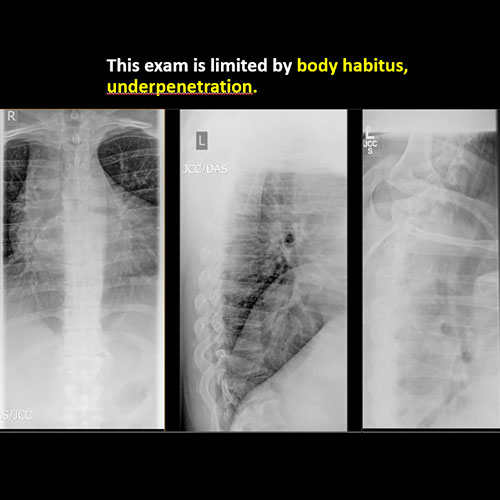
The exam is over or under penetrated. |
Yes | NA |
|
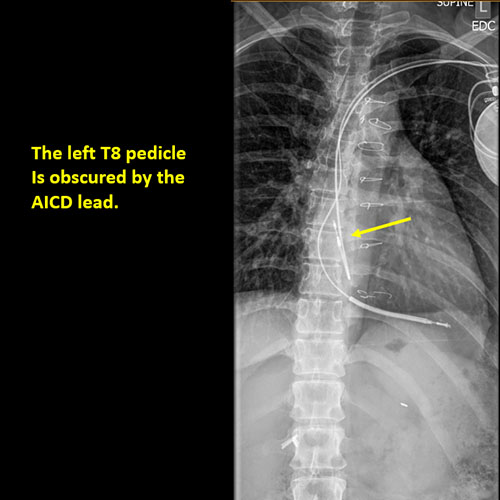
The exam is limited by overlying structures, bones or soft tissues, patient positioning, support devices, or motion. |
Yes | NA |
| Prevertebral and paravertebral soft tissues: | Correct Answer | Your Answer |
|---|---|---|
|
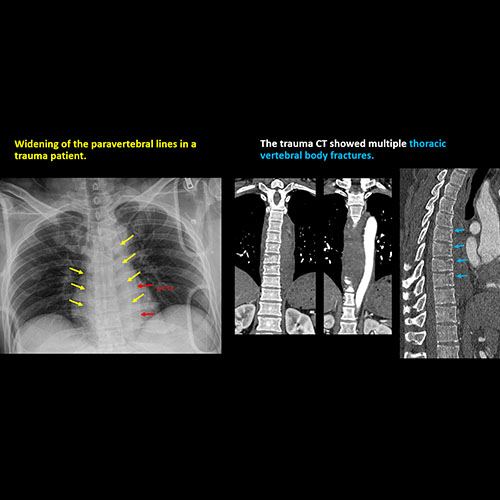
The prevertebral or paravertebral soft tissues are abnormal. |
Yes | NA |
|
|
Yes | NA |
| Spinal alignment: | Correct Answer | Your Answer |
|---|---|---|
|
The vertebral bodies are abnormally aligned. |
No | NA |
|
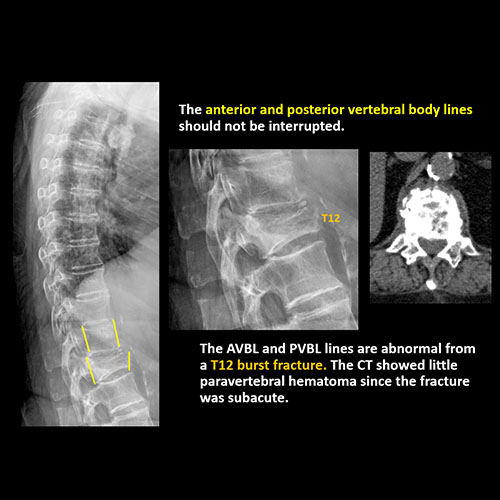
The anterior and posterior vertebral body lines are abnormal or interrupted. |
No | NA |
|
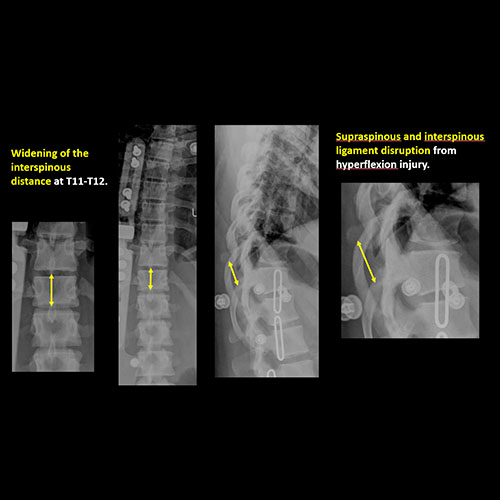
The visualized spinous processes are malaligned or distracted on the AP and/or lateral view(s). |
No | NA |
|
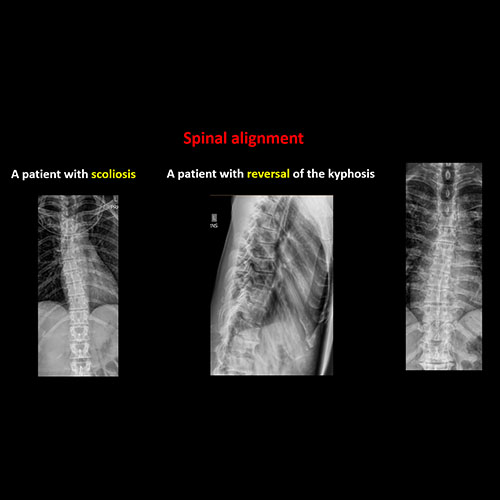
There is exaggeration, reversal, or straightening of the normal kyphosis or there is scoliosis of the thoracic spine. |
No | NA |
| Vertebral bodies, posterior elements and ribs: | Correct Answer | Your Answer |
|---|---|---|
|
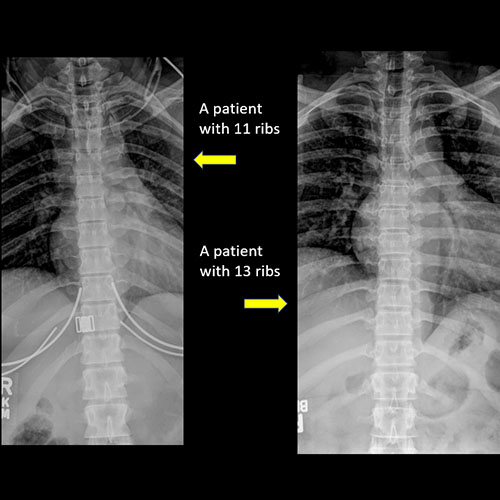
There are more or less than the expected 12 rib-bearing vertebral bodies. |
No | NA |
|
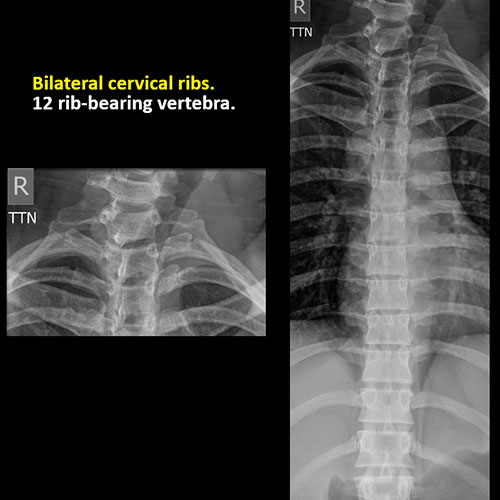
There are cervical ribs at the cervicothoracic junction, or hypoplastic or rudimentary ribs at the thoracolumbar junction. |
No | NA |
|
|
Yes | NA |
|
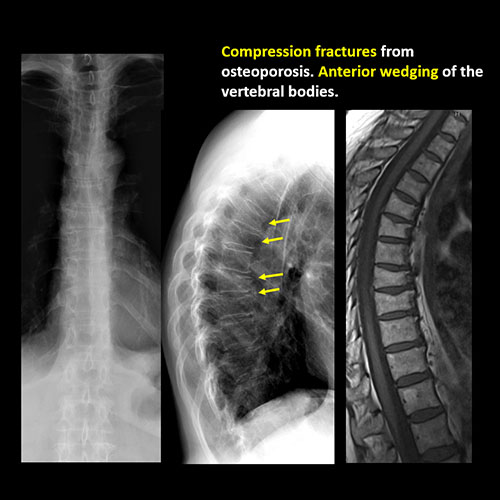
There is anterior wedging and/or compression of a vertebral body. |
Yes | NA |
|
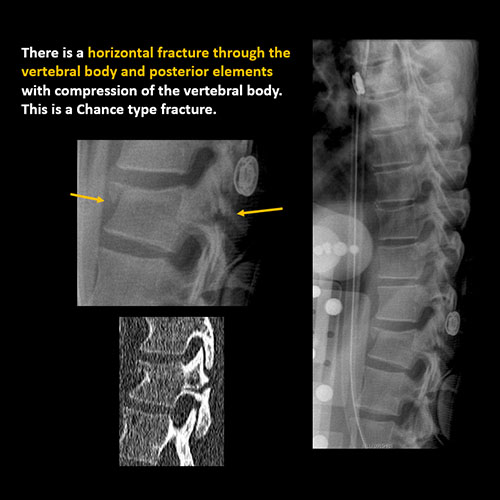
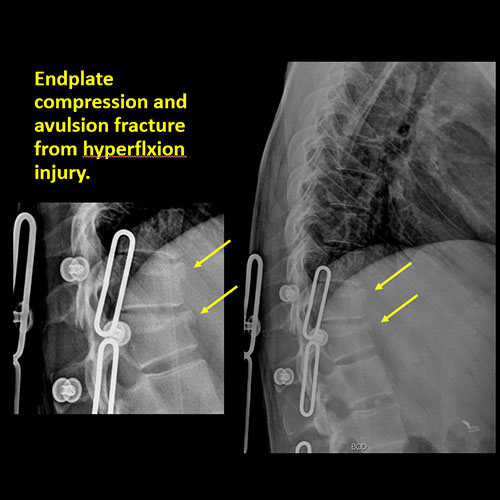
There is an endplate avulsion, compression, or other fracture. |
Yes | NA |
|
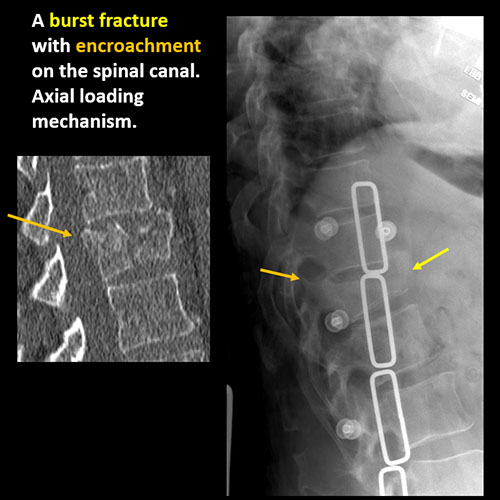
There is displacement of a fracture fragment into the soft tissues or spinal canal. |
No | NA |
|
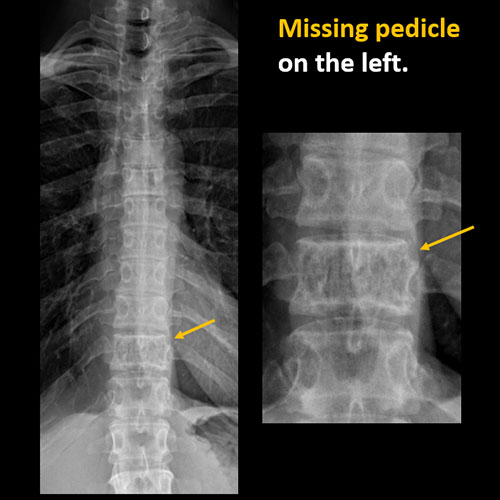
There is a lytic, sclerotic, or blastic lesion or erosion of a pedicle or other posterior element. |
No | NA |
|
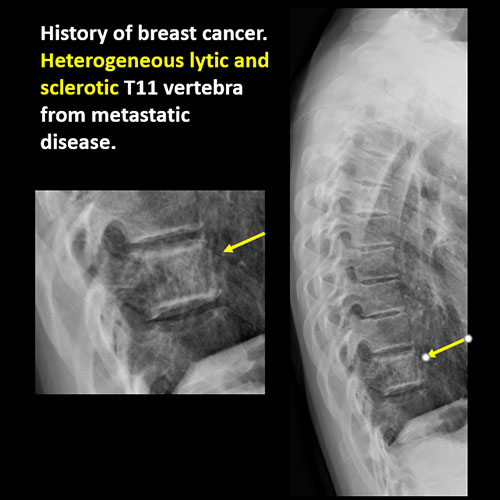
There is evidence of a lytic, sclerotic, or blastic lesion, or disruption of the trabecular pattern of a vertebral body, end plate, or rib. |
Yes | NA |
|
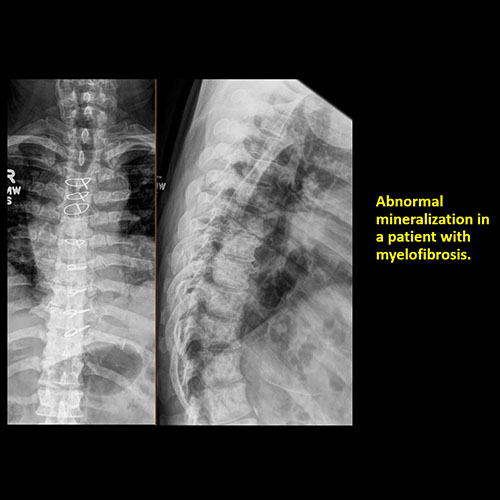
There is focal or diffuse abnormal mineralization of the thoracic spine. |
No | NA |
| Disc spaces, facet joints, and neural foramina: | Correct Answer | Your Answer |
|---|---|---|
|
|
Yes | NA |
|
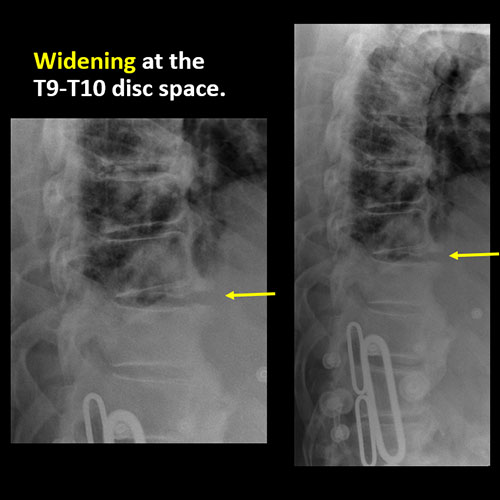
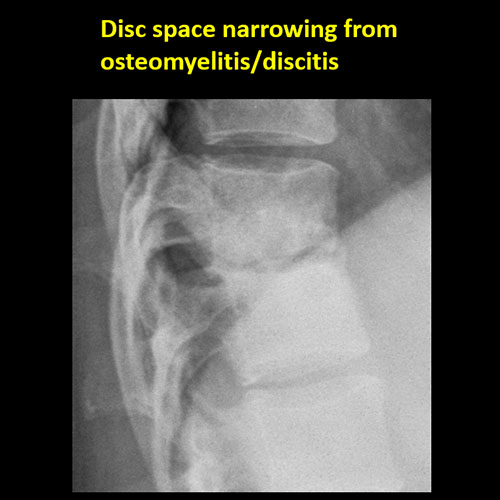
There is disc space narrowing with or without erosive or sclerotic changes of the end plates or subchondral bone other than from degenerative change. |
No | NA |
|
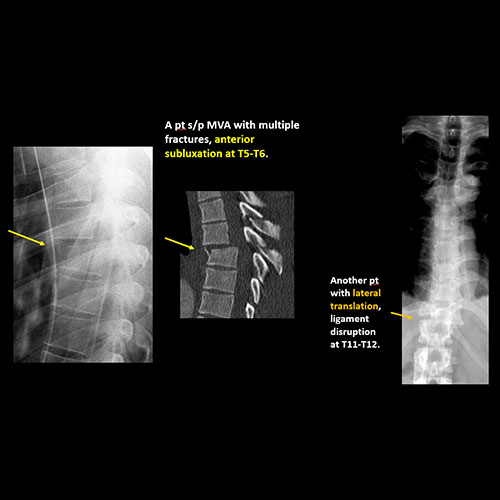
There is anterior, lateral, or posterior spondylolisthesis, subluxation, or rotational abnormality at a disc space. |
No | NA |
|
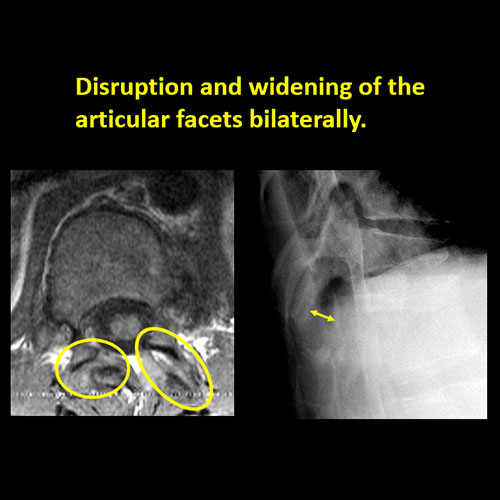
There is widening, rotational abnormality, or displacement of facets at any motion segment. |
No | NA |
|
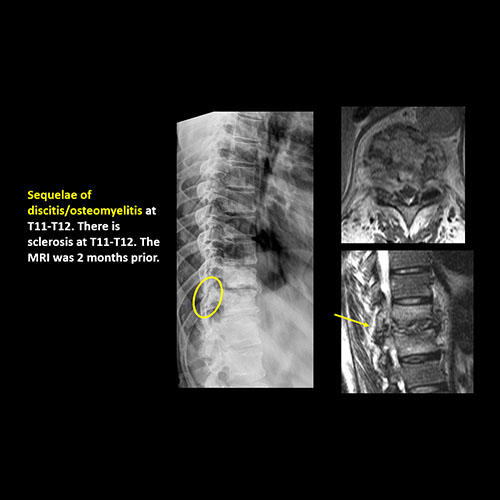
There is facet joint narrowing or sclerosis other than from degenerative change. |
No | NA |
|
There is narrowing or encroachment of a neural foramen other than from degenerative change. |
No | NA |
|
There are degenerative changes present that might explain the patient’s symptoms. |
No | NA |
| Additional soft tissues and bones (included neck, chest, and abdomen): | Correct Answer | Your Answer |
|---|---|---|
|
There is abnormality of the soft tissues and bones of the included neck other than from degenerative change. |
No | NA |
|
There is abnormality of the soft tissues and included bones of the upper extremities, clavicles, and sternum other than from degenerative change. |
No | NA |
|
There is abnormality of the included lungs, mediastinum other than the previously evaluated paravertebral soft tissues, trachea and more distal airways, diaphragm, stomach, bowel, or bowel gas pattern. |
No | NA |
|
There is free intraperitoneal or retroperitoneal air, or other abnormal air in the included abdomen. |
No | NA |
|
There are vascular calcifications or other soft tissue calcifications present. |
No | NA |
|
There is a foreign body or there are post surgical changes of the bones or soft tissues of the included neck, thorax, or abdomen. |
No | NA |
|
There is an abnormality or complication of post surgical hardware/device. |
N/A | NA |
|
There are support lines or tubes in an abnormal position. |
No | NA |
| Other findings: | Correct Answer | Your Answer |
|---|---|---|
|
There are other existing conditions that might be contributing to symptoms which can or should be further evaluated non-emergently. |
No | NA |
Impression
Expert Answer
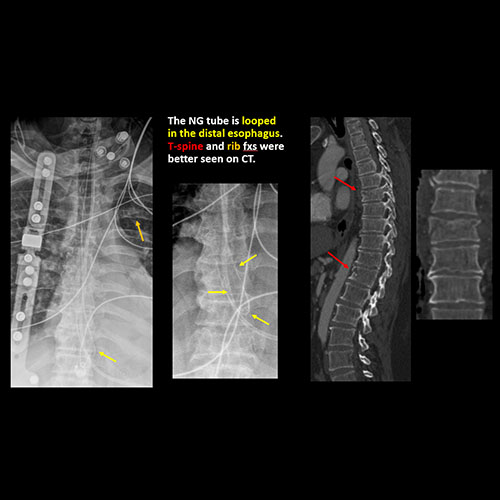
There is anterior wedging and a compression fracture of the T7 vertebral body. The right and left paravertebral lines are widened likely from hematoma. Cross sectional imaging is recommended for further evaluation.
Your Answer
Recommendations & Acuity
Recommendations
Expert Answer
The results were called to the ED physician and a CT scan will be ordered.
Your Answer
Acuity
Expert Answer
Urgent (Action Necessary in a few hours)