Case Notes
History
Possible orbital, other facial and/or skull fractures, due to craniofacial trauma.Exam
Prior Study
Dicom
Findings
| Facial and Scalp Soft Tissues and Airway | Correct Answer | Your Answer |
|---|---|---|
|
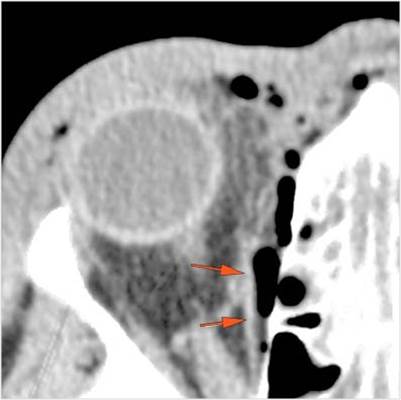
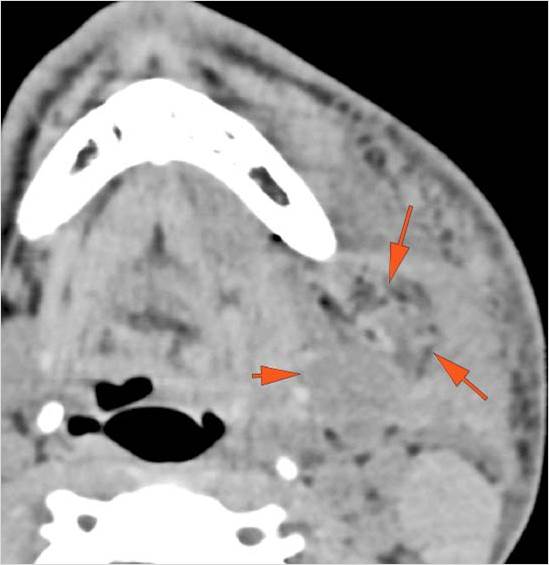
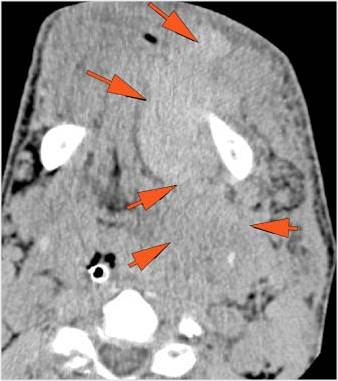
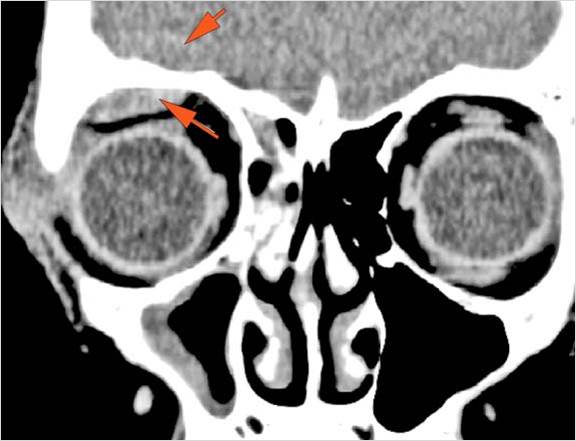
There is localized edema, hematoma or abscess within in the facial or scalp soft tissues, SMAS, infratemporal fossa, masticator space or oral cavity. |
Yes | NA |
|
There is evidence of gas or a foreign body at a possible fracture site, indicative of an open or penetrating injury. |
No | NA |
|
There is soft tissue swelling suggesting injury to the parotid or submandibular glands. |
No | NA |
|
The upper airway is significantly narrowed or obstructed. |
No | NA |
| Intracranial | Correct Answer | Your Answer |
|---|---|---|
|
There is subperiosteal, epidural or subdural hematoma and/or pneumocephalus along the boney walls of the anterior or middle cranial fossa or elsewhere. |
No | NA |
|
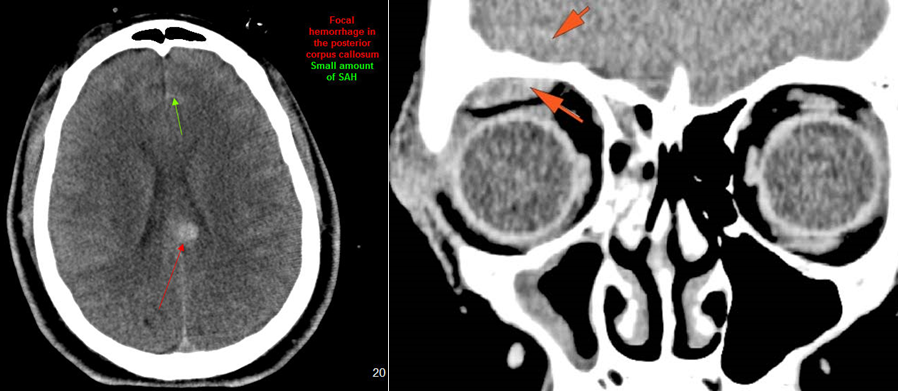
There is subarachnoid bleeding. |
No | NA |
|
There is evidence of parenchymal brain injury. |
No | NA |
| Orbits and Orbital Zygomatic Complex | Correct Answer | Your Answer |
|---|---|---|
|
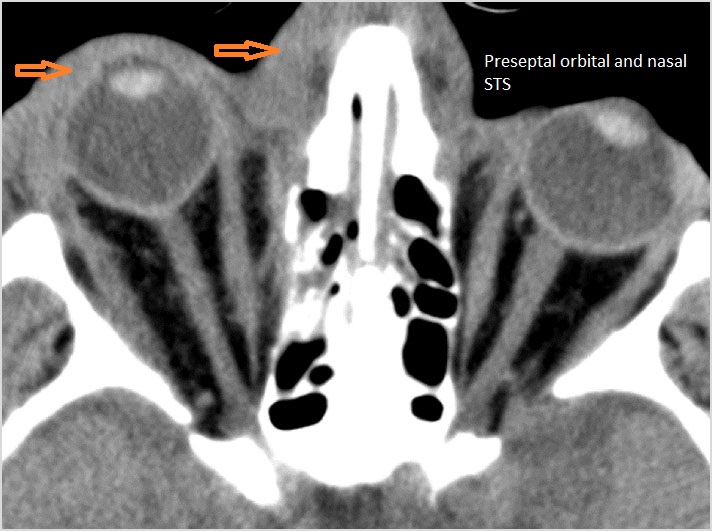
The preseptal soft tissues including the lacrimal gland and sac are normal. |
Yes | NA |
|
There is evidence of a foreign body at the fracture site, indicative of penetrating injury. |
No | NA |
|
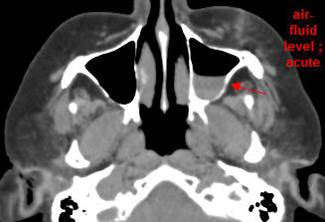
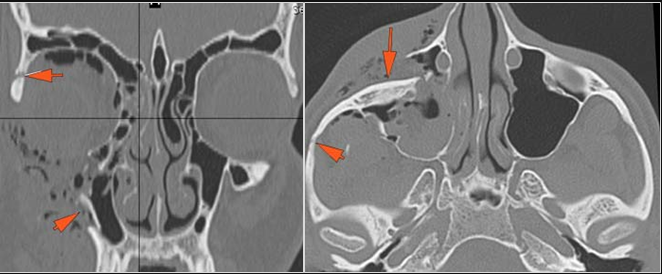
There is evidence of blood products in the paranasal sinuses. |
Yes | NA |
|
There is evidence of a subperiosteal hematoma along the medial or lateral wall, roof or floor of the orbit. |
No | NA |
|
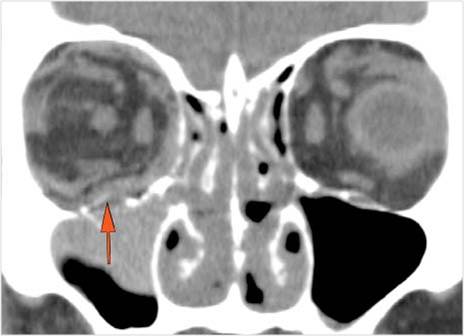
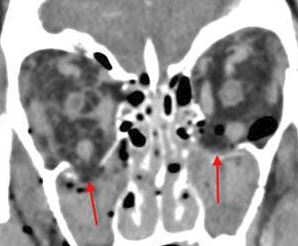
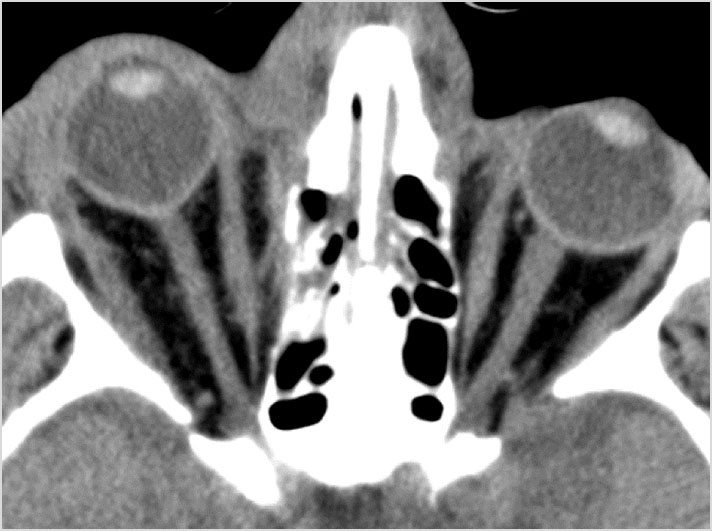
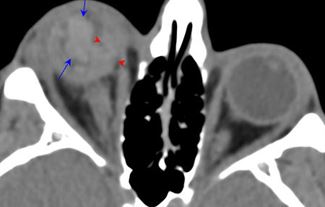
The circumferential extraconal and the intraconal orbital fat are infiltrated. |
Yes | NA |
|
There is evidence of herniated intra-orbital fat. |
Yes | NA |
|
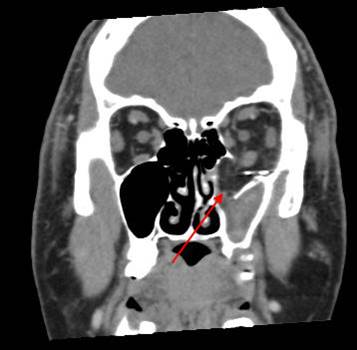
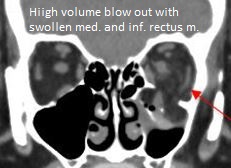
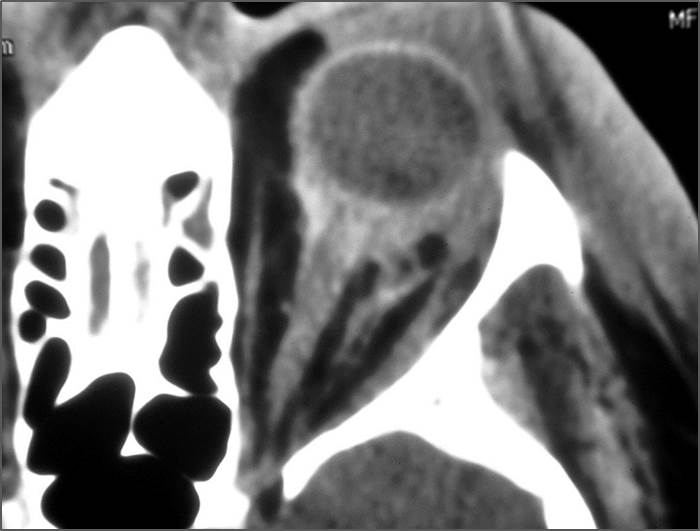
The extraocular muscles are swollen, infiltrated or herniated into a fracture site. |
Yes | NA |
|
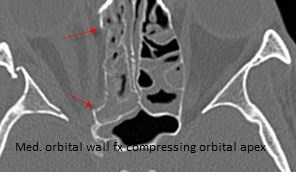
The soft tissues of the orbital apex and the superior and inferior orbital fissures appear abnormal. |
Yes | NA |
|
The orbital veins appear abnormal. |
No | NA |
|
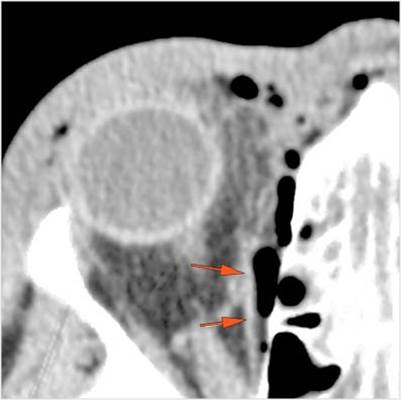
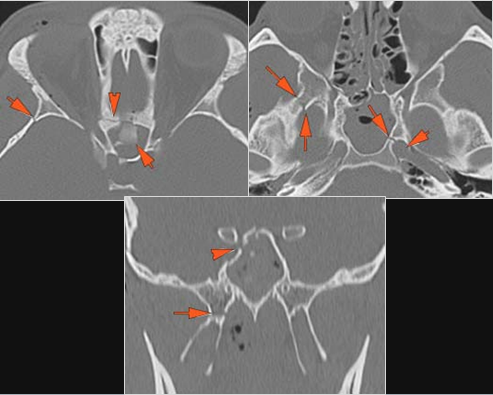
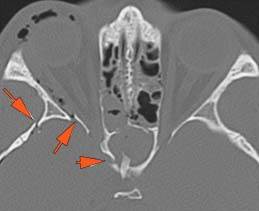
There is evidence of bony injury along the walls and/or floor of the orbit. |
Yes | NA |
|
The supraorbital and infraorbital rims and orbital process of the zygoma and/or frontozygomatic suture are fractured. |
No | NA |
|
|
No | NA |
|
|
No | NA |
|
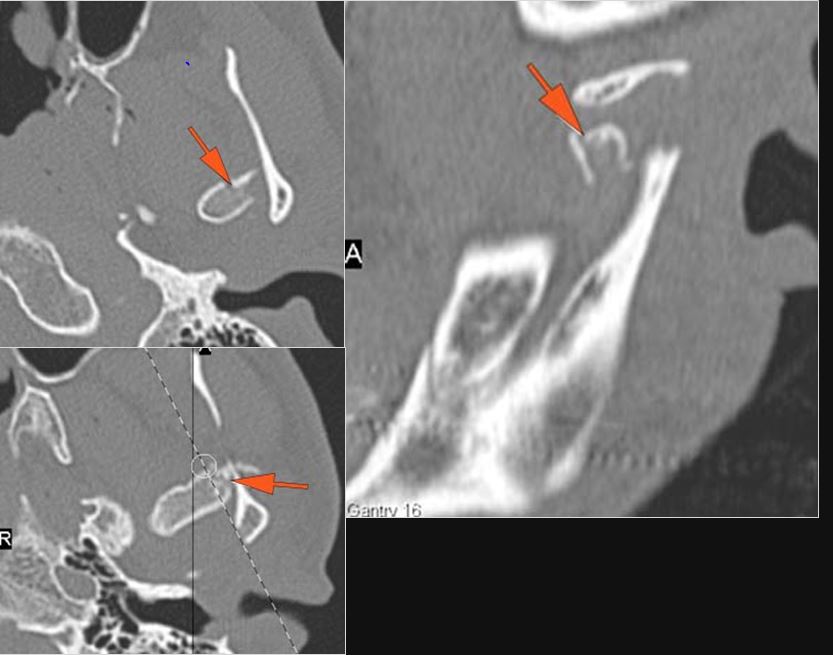
The optic strut and remainder of the optic canal and adjacent body and lesser wings of the sphenoid bone are fractured. |
No | NA |
|
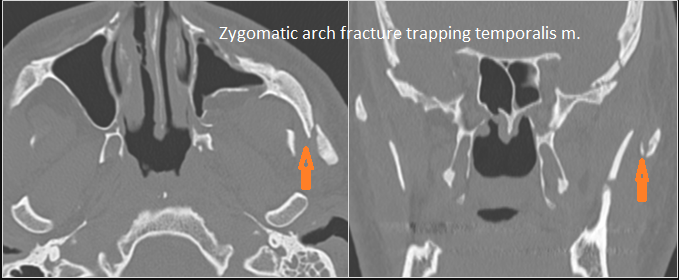
There is entrapment of the muscles of mastication by fractures of the coronoid process and/or zygomatic arch. |
No | NA |
| Central Skull Base | Correct Answer | Your Answer |
|---|---|---|
|
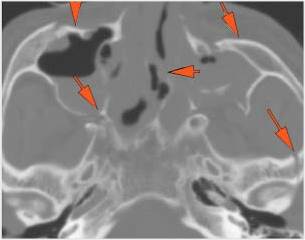
There is a fracture of the greater or lesser wing of the sphenoid bone or basisphenoid. |
No | NA |
| Eyes | Correct Answer | Your Answer |
|---|---|---|
|
Proptosis is present. |
Yes | NA |
|
The optic nerve has a stretched appearance. |
No | NA |
|
|
No | NA |
|
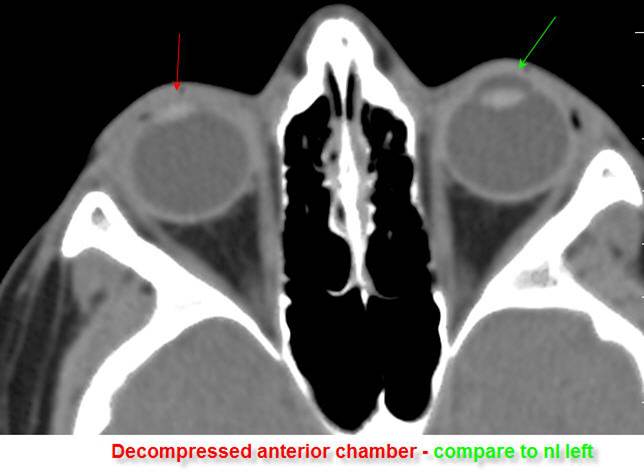
There are signs of a decompressed globe. |
No | NA |
|
The lens is in abnormal position on either side. |
No | NA |
|
There is evident general optic sheath swelling or swelling at the junction of the globe and sheath to suggest an optic sheath hematoma. |
No | NA |
|
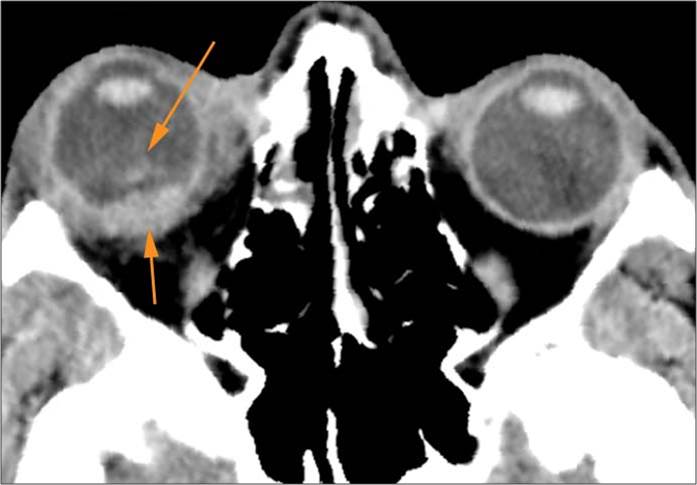
There is evident subretinal, subchoroidal or intravitreous hemorrhage. |
No | NA |
| Nasolacrimal Canal and Sac | Correct Answer | Your Answer |
|---|---|---|
|
There is bony injury to the nasolacrimal canal. |
No | NA |
|
The nasolacrimal sac appears to be damaged. |
No | NA |
| Fronto-Naso-Ethmoidal Complex | Correct Answer | Your Answer |
|---|---|---|
|
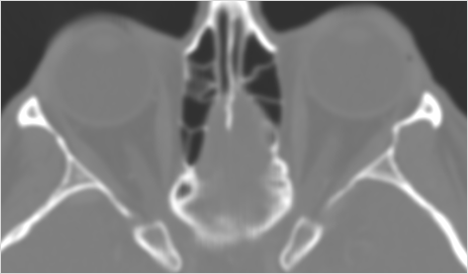
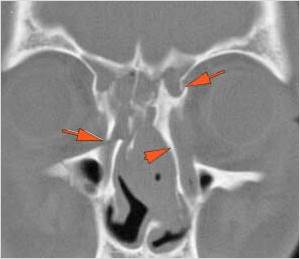
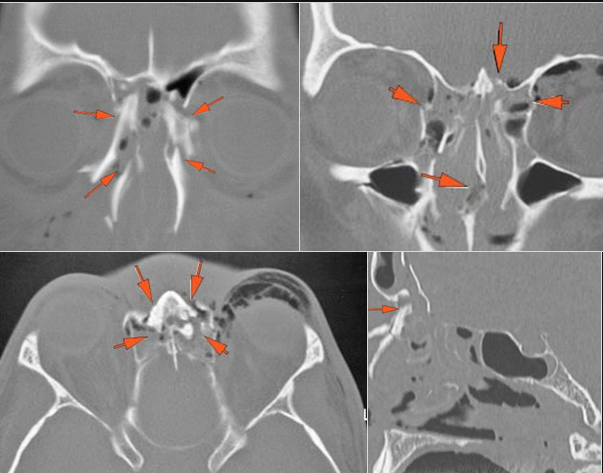
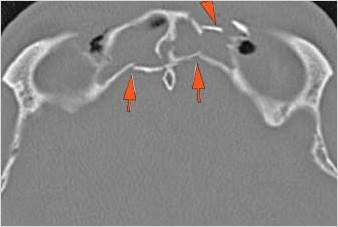
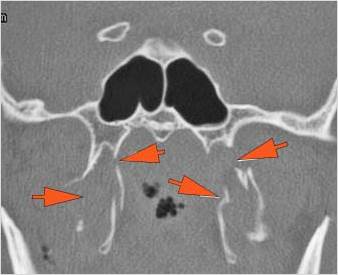
The mesial naso-orbito-ethmoid complex is fractured. Specifically, there is bony injury of the nasal bones or the frontal process of the maxilla and the medial walls of the orbit are abnormal. |
Yes | NA |
|
The intercanthal distance is increased. |
No | NA |
|
The frontal bone and frontal sinus inner and outer tables are fractured. |
No | NA |
|
There is injury of the ethmoid complex. Specifically, the ethmoid roof, olfactory fossa and the cribriform plate are fractured and/or significantly dehiscent. |
Yes | NA |
| Midface Structures and Mandible | Correct Answer | Your Answer |
|---|---|---|
|
There is bony injury of the body, alveolar ridge, premaxilla, the infraorbital rim, the palatine or the frontal process of the maxillary bones on either side. |
No | NA |
|
The pterygoid processes of the sphenoid bone are fractured. |
No | NA |
|
There is bony injury or displacement of the body, angle, ramus, alveolar ridge, condylar coronoid process and parasymphyseal or symphyseal region of the mandible. |
No | NA |
| Cervical Spine | Correct Answer | Your Answer |
|---|---|---|
|
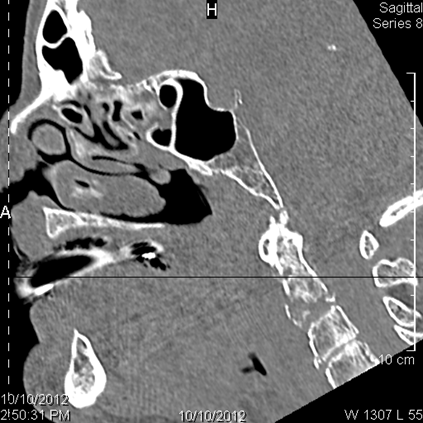
The visualized portions of the cervical spine are abnormal for the patient’s age. |
No | NA |
Impression
Expert Answer
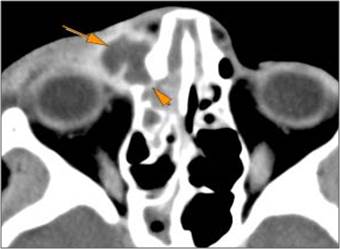
High volume medial orbital wall fracture with possible significant entrapment of the medial rectus muscle and comminuted and minimally depressed nasal bone fractures
Your Answer
Recommendations & Acuity
Recommendations
Expert Answer
Notify emergency room acutely about possible medial rectus entrapment
Your Answer
Acuity
Expert Answer
Urgent (Action Necessary in a few hours)