Case Notes
History
Second toe pain in a patient with diabetes.Exam
Prior Study
Dicom
Findings
| Limitations | Correct Answer | Your Answer |
|---|---|---|
|
There is patient motion or other limitations. |
Yes | NA |
| Skin/Hypodermis | Correct Answer | Your Answer |
|---|---|---|
|
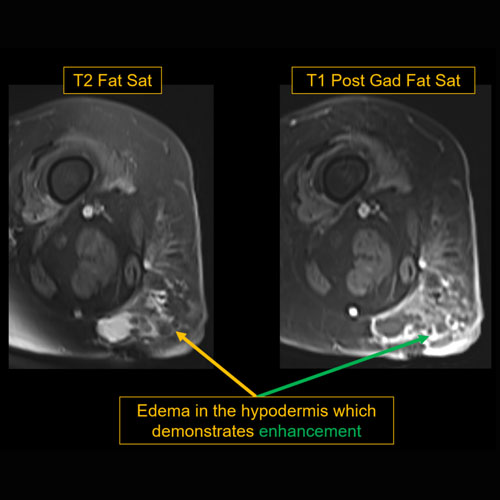
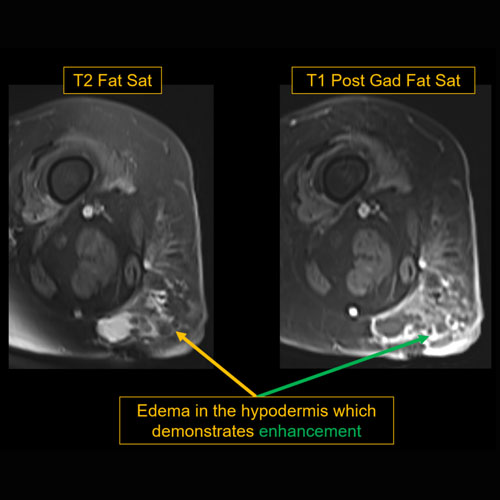
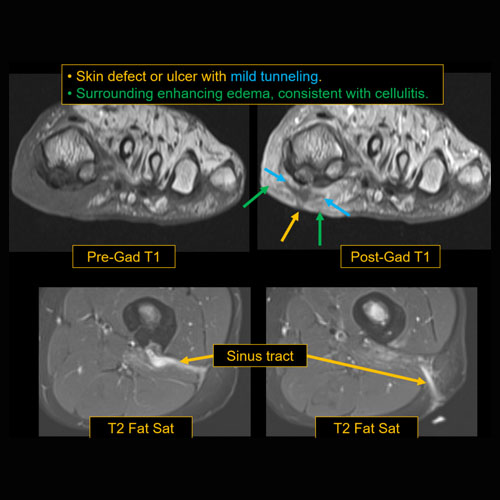
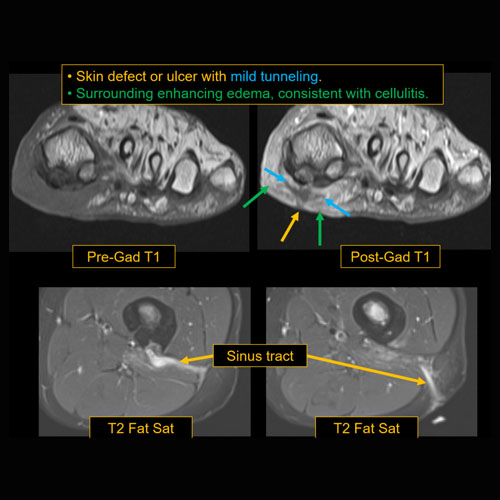
There is edema or hyperenhancement. |
Yes | NA |
|
|
No | NA |
|
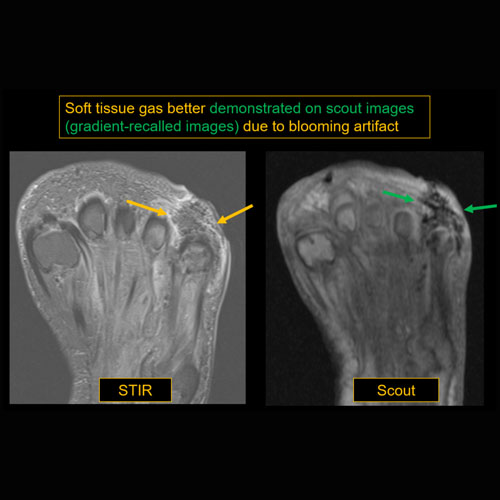
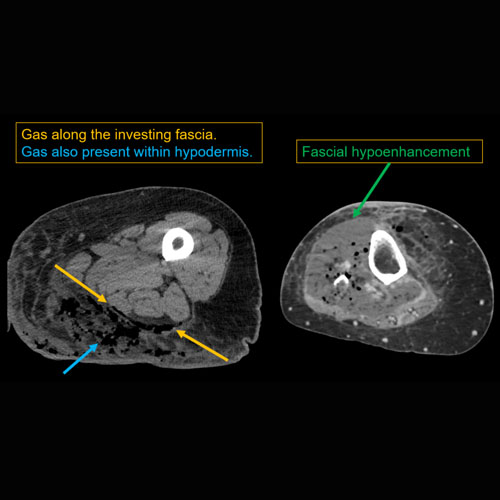
There is gas or foreign body. |
No | NA |
|
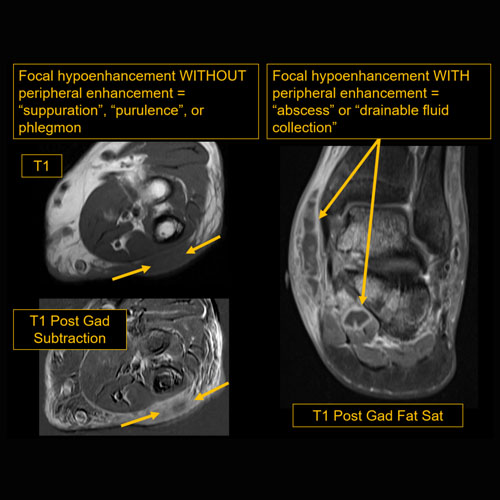
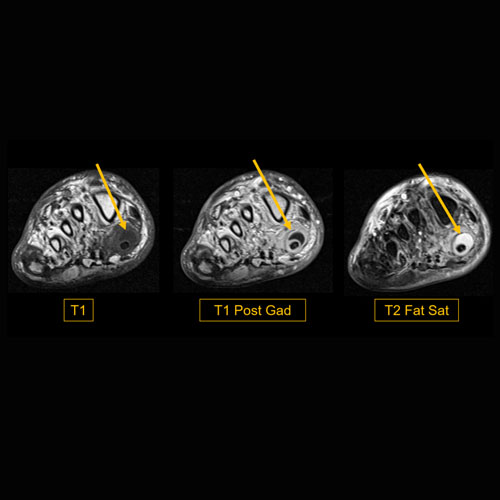
There is confluent hypoenhancement to suggest phlegmon, suppuration, abscess, or drainable fluid collection in the hypodermis. |
No | NA |
| Investing/Intermuscular Fascia | Correct Answer | Your Answer |
|---|---|---|
|
|
No | NA |
|
|
No | NA |
|
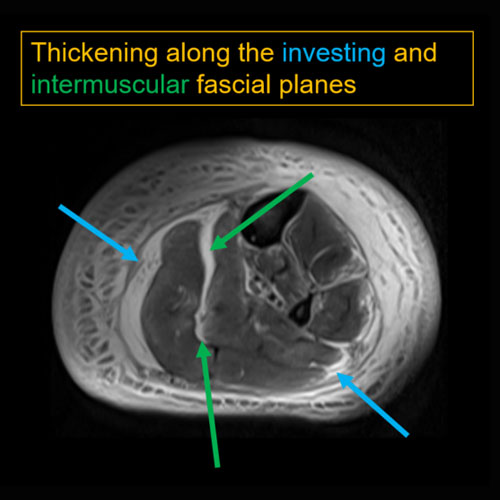
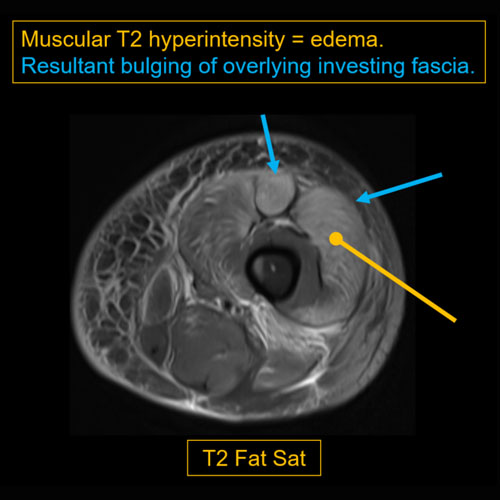
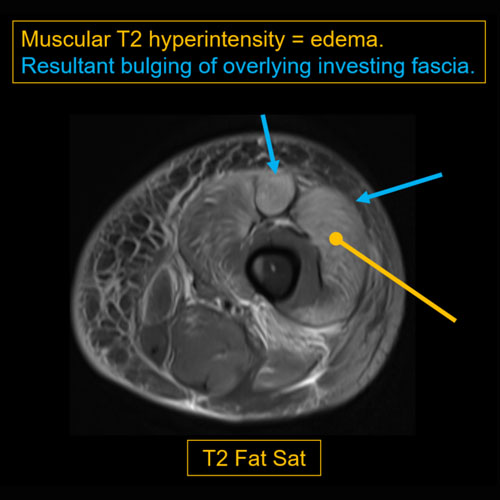
There is bulging of the fascia. |
No | NA |
| Muscles | Correct Answer | Your Answer |
|---|---|---|
|
There is edema or hyperenhancement. |
No | NA |
|
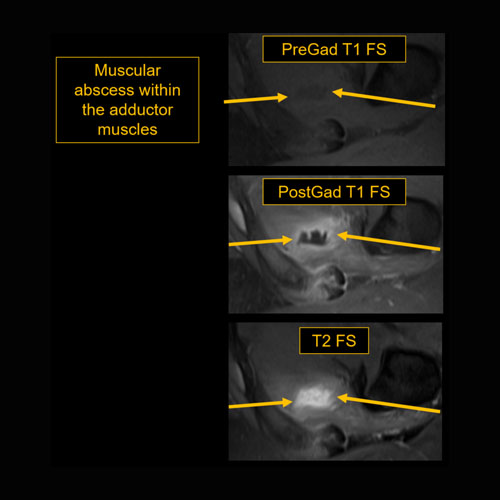
There is hypoenhancement, lack of enhancement, or organized fluid collection. |
No | NA |
|
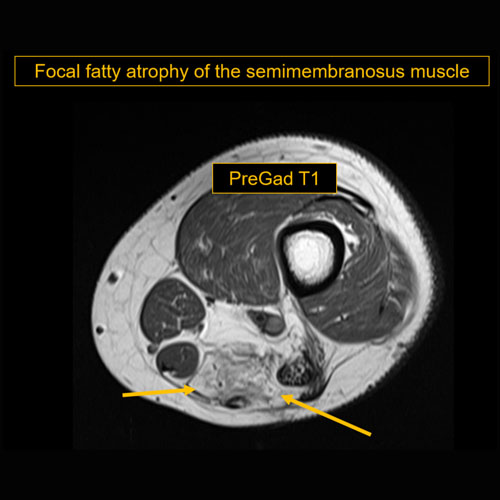
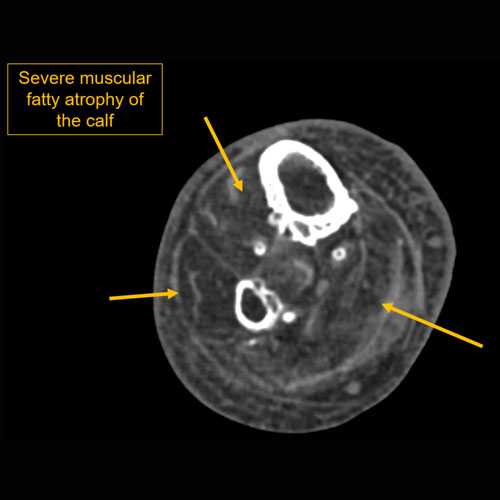
There is fatty atrophy. |
No | NA |
| Bones | Correct Answer | Your Answer |
|---|---|---|
|
There are fractures. |
No | NA |
|
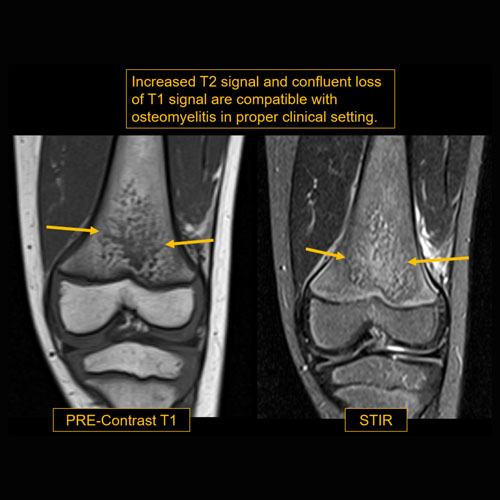
There is periosteal reaction, osseous destruction, or other abnormal marrow to suggest osteomyelitis. |
Yes | NA |
|
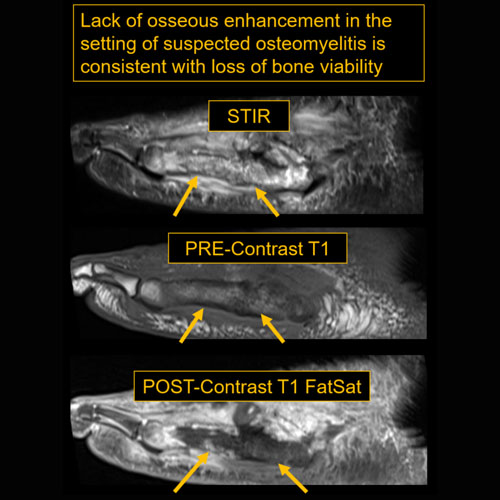
There is osseous hypoenhancement or lack of enhancement to suggest loss of bone viability. |
No | NA |
|
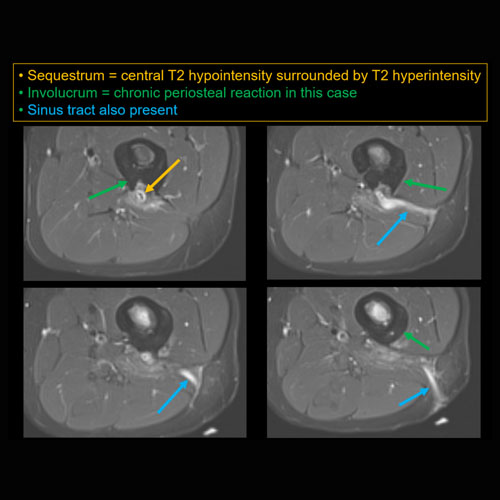
There is cloaca, sequestrum, or involucrum. |
No | NA |
|
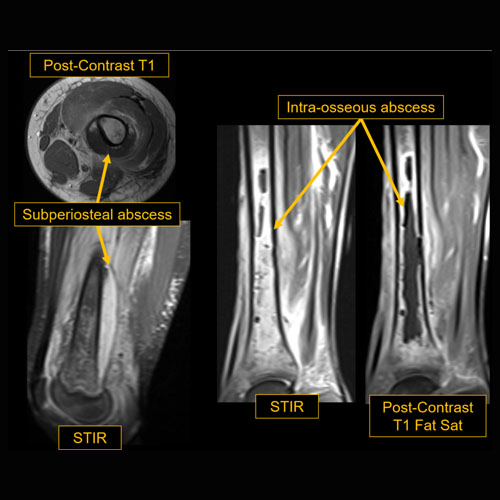
There is a subperiosteal or intra-osseous abscess. |
No | NA |
| Visualized Joints | Correct Answer | Your Answer |
|---|---|---|
|
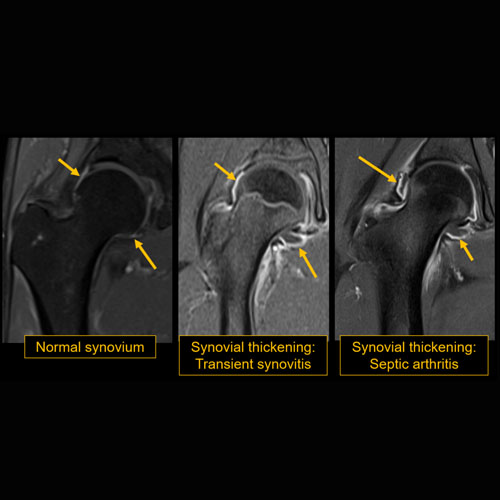
There is a joint effusion or synovitis. |
No | NA |
|
There is malalignment, degenerative changes, or other gross internal derangement. |
Yes | NA |
| Miscellaneous | Correct Answer | Your Answer |
|---|---|---|
|
There is tenosynovitis. |
No | NA |
|
Major visualized vascular structures are abnormal. |
No | NA |
|
Major visualized nerves are abnormal. |
No | NA |
Impression
Expert Answer
Signal changes about the second toe proximal interphalangeal joint are nonspecific and could be related to a mechanical etiology such as stress reaction. Infection is an additional consideration, though thought less likely given lack of significant surrounding soft tissue edema.
Your Answer
Recommendations & Acuity
Recommendations
Expert Answer
Follow up as clinically indicated.
Your Answer
Acuity
Expert Answer
Routine Communication Permissable